
What Makes a Vacuum Emulsifying Mixer Actually Worth Buying
Honestly, most buyers get this wrong on the first pass. They see a spec sheet, compare RPM numbers and tank volume, and assume that’s the whole story — but the vacuum function itself is where the real quality gap shows up between machines that are worth the investment and ones that’ll frustrate you within six months.
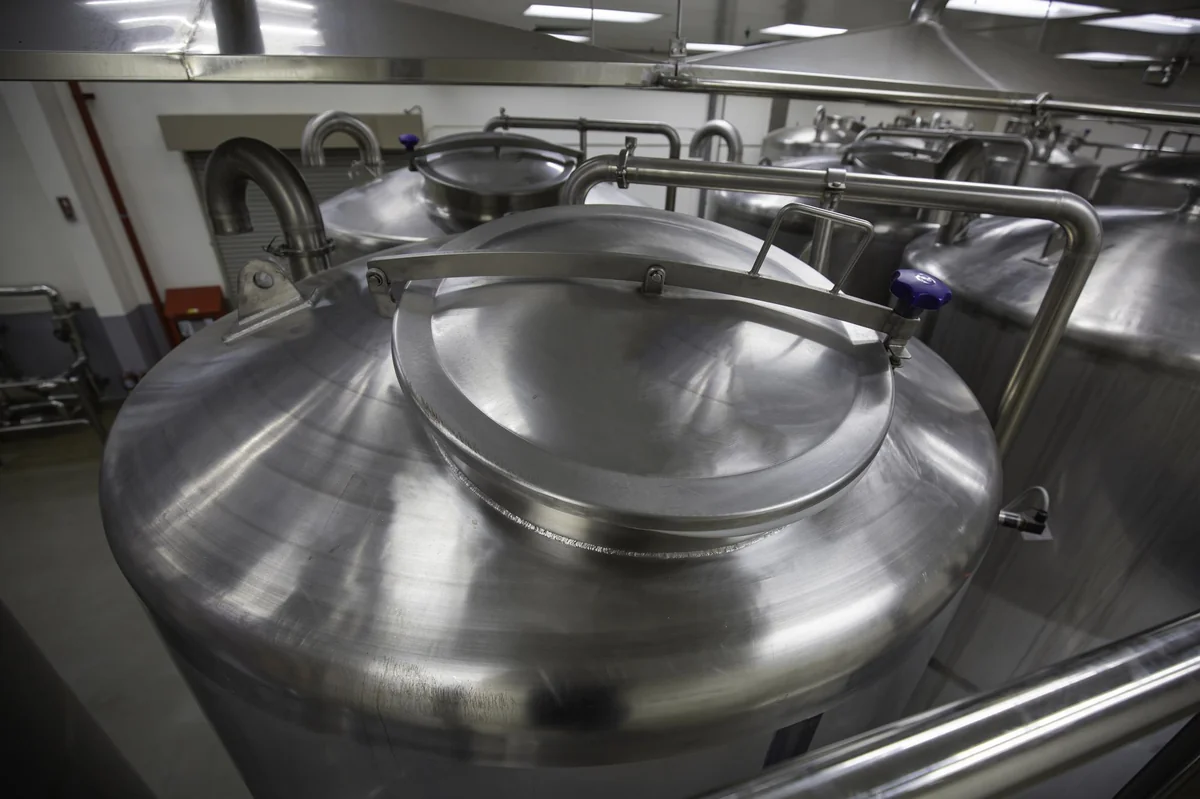
So here’s the thing about vacuum emulsifying mixers that doesn’t get talked about enough: the vacuum isn’t just a fancy add-on. It’s doing active work. By pulling air out of the mixing chamber before and during emulsification, it stops micro-bubbles from forming inside your emulsion — which matters enormously if you’re making cosmetic creams, pharmaceutical ointments, or food products where texture and shelf stability are non-negotiable. A creamy lotion with trapped air oxidizes faster. Full stop.
What separates a genuinely useful machine from a mediocre one comes down to a few specific things — and none of them are about horsepower.
- Vacuum integrity: Can the chamber hold a stable vacuum (typically -0.08 to -0.1 MPa) throughout the full mixing cycle without pressure creep?
- Homogenizer placement: Bottom-entry homogenizers generally outperform top-entry designs for particle size reduction in viscous materials.
- Material contact surfaces: 316L stainless steel throughout, not just on the visible panels.
- Heating and cooling jacket: Uniform temperature control across the batch — not just at the sensor point.
- Seal quality: The gaskets and mechanical seals around the shaft are where budget machines cut corners first.
Brands like Aile have built their positioning around exactly these specs for export-facing buyers, which tells you something about where the real purchasing criteria land when international quality standards enter the conversation.
And then there’s the practical side — after-sales support, spare parts availability, documentation in your language. A machine that arrives with a Chinese-only manual and no technical contact is a headache waiting to happen. (Sounds obvious, but it catches buyers off guard more often than you’d think.)
Suppliers like Shenxianhu work directly with buyers on customized specifications and quality control before shipment, which is the kind of practical backstop that actually matters when you’re sourcing a vacuum emulsifying mixer for the first time and don’t want to learn the hard lessons yourself.
Key Technical Specs That Separate High-Performance Emulsifying Mixers from the Rest
Specs matter more than most buyers realize — and the gap between a mediocre unit and a genuinely capable vacuum emulsifying mixer shows up fast once you’re running production batches. So here’s what to actually look at, beyond horsepower and tank volume.
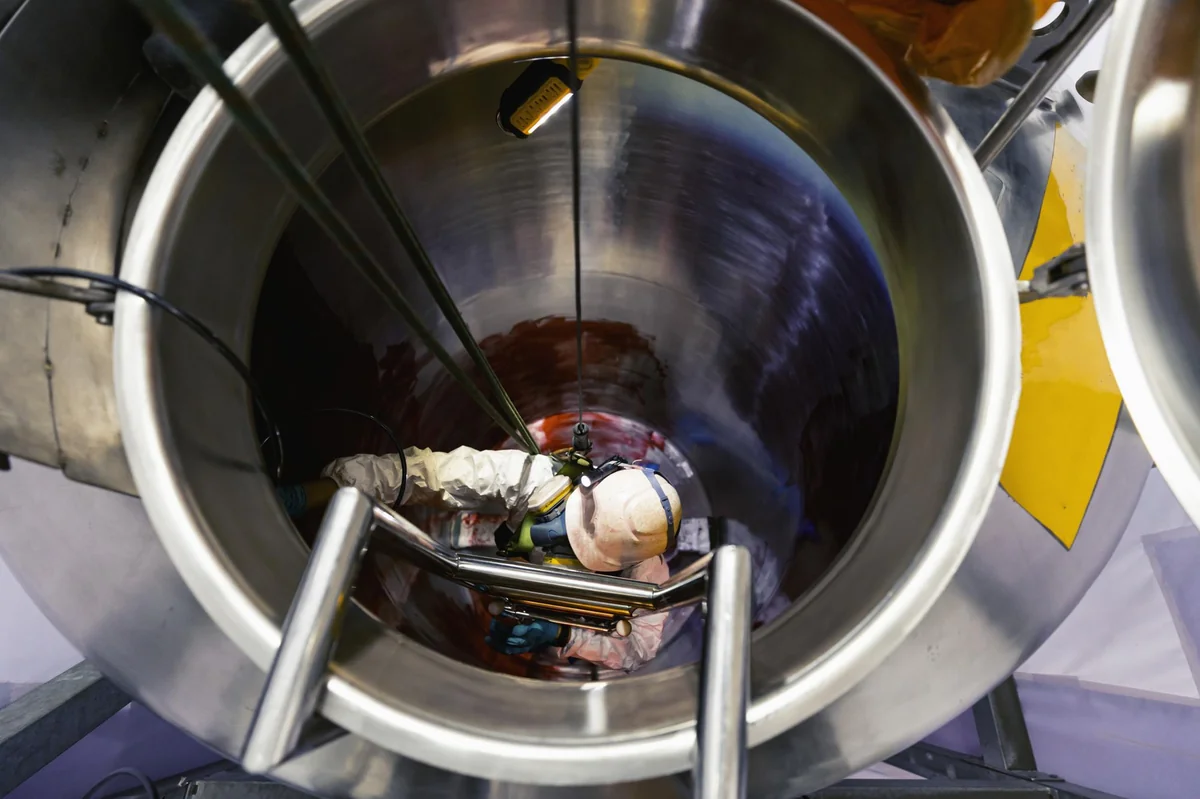
Vacuum depth is the first thing worth scrutinizing. A machine pulling vacuum to -0.09 MPa or lower is doing real work: eliminating microbubbles, preventing oxidation, and giving you that smooth, aerated-free emulsion that cosmetic and pharmaceutical buyers expect. Anything shallower than that and you’re leaving quality on the table.
Homogenizer speed is next. High-shear rotor-stator setups running 0–3,500 RPM (some premium configurations push past that) are what actually break down particle size into the 1–5 micron range that most creams and serums need. Not just “mixing.” Actual emulsification. Big difference.
- Heating and cooling jacket range — typically 20°C to 90°C for most formulations, though pharmaceutical applications often need tighter PID temperature control
- Scraper blade clearance — should be adjustable and close enough to prevent product buildup on vessel walls
- Motor sealing standard — IP55 minimum if you’re running water-based or corrosive emulsions anywhere near the drive unit
- CIP (clean-in-place) compatibility — non-negotiable for GMP environments
And then there’s material spec — 316L stainless steel on product-contact surfaces isn’t a luxury, it’s a baseline. Some suppliers offer 304 and call it equivalent. It isn’t, especially if you’re running acidic or salt-heavy formulations.
Aile is one of the brand names that surfaces regularly in discussions about Chinese-manufactured emulsifying equipment, which tells you the domestic market is mature enough to have recognizable players with differentiated specs. That kind of market context is useful when you’re benchmarking what a given price point should get you.
Control systems are where cheap machines really expose themselves. A proper touchscreen HMI with programmable batch cycles, data logging, and alarm outputs isn’t just convenient — it’s what separates a production-grade machine from something that’ll frustrate your operators inside six months. (And yes, the documentation and interface language matters here too, which loops back to the sourcing conversation from before.)
How to Match Vacuum Emulsifying Mixer Capacity and Configuration to Your Production Scale
Capacity mismatches kill production efficiency faster than almost any other sourcing mistake. A 50L vacuum emulsifying mixer running at 30% fill to hit a small batch target isn’t just wasteful — it’s actually bad for emulsion quality, because the rotor-stator geometry and vacuum dynamics are calibrated for a specific working volume range. Underfill it consistently and you’ll see aeration problems and inconsistent viscosity batch to batch.
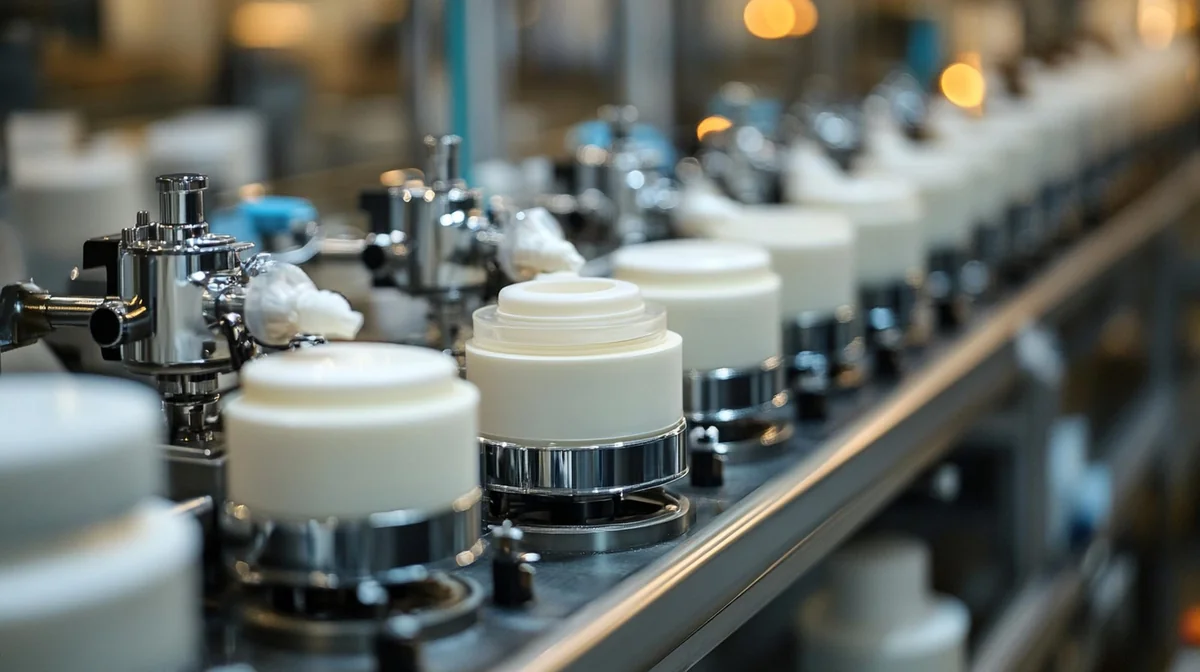
So here’s a rough framework that maps production scale to equipment class:
| Production Scale | Recommended Vessel Capacity | Typical Configuration | Notes |
|---|---|---|---|
| R&D / pilot | 2L – 10L | Benchtop, manual controls | Prioritize flexibility over throughput |
| Small-batch commercial | 20L – 100L | Floor-standing, basic HMI | Where most indie brands start |
| Mid-scale production | 200L – 500L | Full PLC, jacketed vessel, CIP-ready | Aile and comparable manufacturers compete heavily here |
| Industrial scale | 1000L+ | Custom skid, automated dosing | Requires factory layout planning upfront |
But capacity is only half the question. Configuration — meaning the specific combination of homogenizer speed range, heating/cooling jacket spec, vacuum depth capability, and scraper blade design — has to match your actual formula requirements, not just your batch size. A 200L vacuum emulsifying mixer built for light lotions won’t handle a high-viscosity wax-based cream without motor strain and seal wear.
Working volume is typically 60–80% of nominal vessel capacity. Keep that in mind when you’re comparing spec sheets. (Suppliers don’t always volunteer this detail upfront, so ask explicitly.)
And if you’re scaling from pilot to production, the smart move is to source both units from the same manufacturer or at minimum the same design lineage — so your validated parameters at 10L actually translate meaningfully when you step up to 200L.
Aile and Other Trusted Brands: What Real Selection Criteria Look Like in Practice
Brand reputation in this category is genuinely complicated. You can’t just Google “best vacuum emulsifying mixer” and trust the results — half those lists are affiliate-driven or based on spec sheets nobody actually verified under production conditions.
So here’s how buyers who do this seriously actually filter the field. Aile is one name that keeps coming up in sourcing conversations, particularly among mid-scale cosmetic manufacturers looking for consistent homogenizer performance without the premium markup of European equipment. The reason Aile gets mentioned isn’t marketing — it’s because their build tolerances on the rotor-stator assembly tend to hold up across extended run cycles, which matters a lot when you’re running two or three batches a day.
But brand name alone is never the filter. Not even close.
The actual criteria that experienced procurement teams use look something like this:
- Documented vacuum depth performance — not the spec sheet number, but what the machine holds under load with a real formula in the vessel
- Availability of spare parts (seal kits, scraper blades, homogenizer heads) with lead times under two weeks
- Whether the supplier can provide batch records or validation support for GMP-adjacent environments
- Heating and cooling jacket uniformity — temperature variance across the vessel wall matters for heat-sensitive emulsions
- After-sales responsiveness, which is honestly where a lot of otherwise decent suppliers fall apart
Suppliers like Shenxianhu, which operates in the export-oriented OEM and wholesale space, tend to attract buyers specifically because they can accommodate customized specifications — vessel geometry, control panel language, voltage standards — without treating it like a special project. That kind of flexibility is underrated when you’re trying to fit a vacuum emulsifying mixer into a facility that wasn’t designed around a standard configuration.
And the documentation piece — CE certification, material compliance reports, weld quality records — that’s non-negotiable for anyone exporting finished product into regulated markets. Ask for it before you negotiate price. (Seriously. Asking after you’ve agreed on terms is a much weaker position.)
Not glamorous criteria. Effective ones.
Conclusion
A vacuum emulsifying mixer is a serious capital purchase — and it rewards serious due diligence. Get the documentation sorted before price negotiations, confirm the supplier can actually handle your voltage and vessel specs without charging you a premium for “customization,” and test their response time before you’re dependent on them.
After-sales support is the variable most buyers underestimate until something goes wrong at 2am before a production run.
Do the boring checklist work upfront. It’s the only part of this process you’ll never regret.
Frequently Asked Questions
Q: What is a vacuum emulsifying mixer and what makes it different from a regular mixer?
A: A vacuum emulsifying mixer combines high-shear homogenization with a sealed, low-pressure environment — the vacuum part pulls out air bubbles during mixing, which matters enormously for cosmetics and pharmaceuticals where oxidation or trapped air ruins the final texture. A standard mixer just blends; this one blends, homogenizes, and deaerates simultaneously. That’s three processes in one machine, which is why the price gap between this and a basic industrial mixer is so significant.
Q: How much does a vacuum emulsifying mixer cost?
A: Entry-level lab-scale units (around 2–5L) start somewhere in the $3,000–$8,000 range from Chinese manufacturers, while production-scale machines (50L and above) can run $15,000 to well over $50,000 depending on vessel material, automation level, and whether you need explosion-proof certification. Don’t anchor to the sticker price alone — factor in freight, installation, and any voltage conversion your facility requires.
Q: Why does vacuum matter in an emulsifying mixer — can’t I just skip that feature?
A: Technically you can buy a non-vacuum emulsifying mixer, but you’ll fight microbubbles in every batch — and in creams, serums, or ointments, that shows up as poor spreadability or a grainy finish that fails quality control. The vacuum also extends shelf life by reducing oxidative degradation in sensitive formulations. For anything going into regulated markets, skipping the vacuum feature is usually a false economy.
Q: How long does a typical production batch take in a vacuum emulsifying mixer?
A: Most emulsion batches run 30 to 90 minutes depending on viscosity, temperature requirements, and how aggressively you’re homogenizing. High-viscosity products like thick body butters or ointments push toward the longer end. Cleaning and turnaround between batches adds another 30–60 minutes, so realistic daily throughput is usually 4–6 batches on a single machine — plan capacity around that, not the theoretical cycle time.
Q: Can I use a vacuum emulsifying mixer for both water-in-oil and oil-in-water emulsions?
A: Yes, the same machine handles both — what changes is your addition sequence and homogenizer speed, not the equipment itself. Most operators keep a formulation log noting which emulsion type, temperature profile, and RPM settings worked for each product. The flexibility is genuinely one of the stronger arguments for this type of machine over single-purpose equipment.
Q: What certifications should a vacuum emulsifying mixer have for pharmaceutical or cosmetic production?
A: At minimum, look for CE marking if you’re importing into Europe, and GMP-compliant documentation if you’re producing regulated products — that means material certificates for any wetted parts (316L stainless steel is the standard), surface finish records, and ideally a Factory Acceptance Test (FAT) report. Some suppliers, including export-focused manufacturers like Shenxianhu, can provide customized documentation packages for specific destination markets, but ask for the paperwork before you finalize price, not after.
Q: How do I scale up from a lab vacuum emulsifying mixer to full production without reformulating?
A: Scale-up is genuinely tricky — shear rates don’t scale linearly, so a formula that works beautifully at 5L can behave differently at 200L. The practical fix is to keep the homogenizer tip speed (measured in m/s, not just RPM) consistent between scales, and run pilot batches at an intermediate volume before committing to full production. Working with a supplier who offers vessels in a logical size progression (5L → 30L → 100L) makes this significantly less painful.
Q: Is a vacuum emulsifying mixer worth buying for small-batch indie cosmetic brands?
A: Honestly, it depends on volume and product type. If you’re making under 20kg per week of a simple lotion, a high-shear homogenizer and a separate deaeration step might get you there cheaper. But the moment you’re producing serums, pharmaceutical creams, or anything with a stability requirement — the vacuum emulsifying mixer pays for itself in reduced rework and failed batches faster than most buyers expect. Related reference: 科普外链.