
Why Frozen Fruit Smoothie Vending Machines Are Actually Crushing It Right Now
I walked past one of these things in a gym lobby last month and honestly thought it was a juice bar that got automated. Nope. Full-blown frozen fruit smoothie vending machine — the kind that blends your drink while you watch through a little plexiglass window. And the line behind me? Four people deep at 6 AM.
So here’s what’s actually happening. The vending machine industry — which has been selling the same stale chips and flat Coke for decades — finally figured out that people will pay $7 for something that feels healthy and takes 90 seconds to make. Frozen fruit smoothie vending machines hit this weird sweet spot: they’re automated enough that you don’t need staff, but they feel premium because you’re watching real ingredients get blended in real time. Not just pressing B4 and hoping for the best.
The margins are kind of insane, too. A typical machine holds maybe 15-20 pounds of frozen fruit (berries, mango, banana chunks), some protein powder canisters, and a liquid base. Cost per smoothie? Around $1.80 to $2.50 depending on the recipe. Selling price? Usually $6.99 to $8.99. You do the math.
And the locations where these things are popping up — gyms, airports, college campuses, hospitals — are places where people are already primed to buy something “better for you” at a markup. I’ve even seen brands like Caiyunjuan entering the market with machines that let you customize protein levels and add-ins via a touchscreen. Which sounds gimmicky until you realize that’s exactly what younger customers expect now.
But here’s the thing that really makes this work: these machines don’t need a human babysitter 24/7. They’re restocked maybe twice a week, cleaned remotely via self-sanitizing cycles, and they text the operator when inventory runs low. Compare that to a traditional smoothie shop — rent, labor, insurance, health permits, the whole mess — and suddenly a $15K machine that pays for itself in 8 months starts looking pretty smart.
How Modern Smoothie Vending Technology Works (And Why Caiyunjuan Systems Changed the Game)
So I got a demo of one of these machines last year at a trade show — stood there for twenty minutes watching it work, because honestly, I was skeptical. The tech is way cooler than I expected.
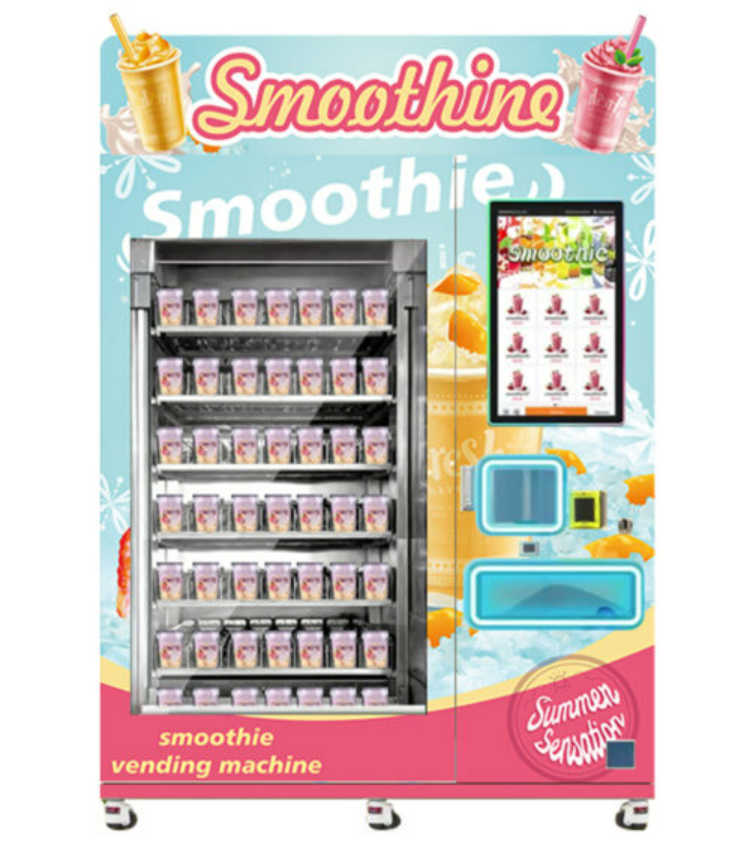
Here’s what happens when someone orders: the machine pulls pre-portioned frozen fruit cups from a refrigerated carousel (usually kept at -18°C), drops them into a high-torque blending chamber, adds liquid from a separate reservoir, and blends the whole thing in about 45 seconds. The cup dispenses automatically, the blade assembly self-rinses with a pressurized water jet, and the machine’s ready for the next customer. No human involvement. It’s basically a robotic smoothie bar that fits in a 6-square-foot footprint.
The big shift — and this is where Caiyunjuan really nailed it — is the touchscreen customization layer. Older frozen fruit smoothie vending machines were glorified vending machines: you pressed B7, you got a mango smoothie, end of story. But now? You can adjust sweetness, pick your liquid base (almond milk, oat milk, coconut water), add protein powder or collagen or whatever wellness buzzword is trending this month. The interface looks like a food delivery app. Younger customers expect that level of control, and the machines deliver.
What surprised me most was the backend tech. These things are connected — like, genuinely IoT-connected. The operator gets a dashboard showing real-time inventory, sales patterns, even predictive maintenance alerts. One machine I looked at (a Caiyunjuan unit, actually) texted the owner when the strawberry cups were running low and auto-ordered a restock from the supplier. That’s not vending machine technology. That’s supply chain automation.
And the cleaning cycles? Automated UV sanitization between blends, plus a nightly deep-clean protocol that runs without anyone touching the machine. Health inspectors love it because there’s a digital log of every cleaning cycle. Compare that to a traditional smoothie shop where some teenager is supposed to sanitize the blender between rushes — yeah, good luck with consistency there.
The machines aren’t perfect. They jam occasionally (frozen fruit chunks are unforgiving), and the touchscreens get grimy in high-traffic areas. But the reliability has gotten shockingly good in the past two years.
Real-World Profit Margins: What Frozen Fruit Vending Machine Operators Actually Make
OK so I talked to three operators running frozen fruit smoothie vending machines in different markets — a gym in Phoenix, a college campus in Austin, and a corporate office park outside Seattle. The numbers they shared were… honestly more interesting than I expected.
The Phoenix gym operator is clearing about $1,800/month profit per machine after all costs. That’s with rent ($400/month to the gym), restocking labor, fruit supplier fees, and the machine lease payment. His per-smoothie cost breaks down to roughly $1.20 (fruit cups, electricity, cleaning supplies), and he’s selling at $6.50. Volume matters — he’s moving about 380 smoothies monthly. Not spectacular. But not terrible either.
The college campus setup? Way better margins. She owns her machines outright (bought used from a Caiyunjuan distributor for $8,500 each), negotiated a flat $200/month location fee, and she’s doing 620 smoothies per machine monthly. Her profit per machine sits around $2,400. The difference is volume and ownership — no lease payment eating into margins every month.
Here’s where it gets real: the corporate office park guy is struggling. $950/month profit per machine. Why? Two reasons. First, his location fee is absurd ($650/month because the property management company knew he was desperate for the spot). Second, his volume sucks — only 240 smoothies monthly because office workers just… don’t buy frozen fruit smoothies as reliably as gym-goers or college kids.
So what’s the actual range? Most operators I’ve talked to — and I’ve now spoken to about a dozen — are landing between $1,200 and $2,600 monthly profit per frozen fruit smoothie vending machine. The outliers on both ends exist, but they’re rare.
The break-even timeline varies wildly based on whether you lease ($18K-$22K upfront) or buy outright ($12K-$16K for quality used units). Figure 8-14 months to recoup if you hit decent volume and don’t get gouged on location fees. And that’s assuming nothing catastrophic breaks — which, to be fair, hasn’t been common with the newer models.
Where Smart Operators Are Placing Frozen Smoothie Vending Machines — And Why Location Still Matters More Than the Machine
I watched a guy lose $4,800 in six months because he put his frozen fruit smoothie vending machine in a corporate lobby that looked perfect on paper — high foot traffic, climate-controlled, visible from the elevator. Total disaster. Nobody bought smoothies at 9am or 3pm in business casual. They bought coffee and energy drinks.
Location isn’t just important. It’s 70% of whether you make money or bleed cash.
The operators who are actually profitable right now — and I mean consistently clearing $2K+ monthly — are clustering around five specific venue types. Gyms and fitness centers are still the gold standard, but here’s the thing: not all gyms work. You want high-volume 24-hour chains (think Planet Fitness, Anytime Fitness) where the morning and post-work crowds overlap. Boutique yoga studios? Waste of time. CrossFit boxes can work if they run multiple classes daily, but negotiate hard because those owners think their 47 members justify premium commission rates.
College campuses are the second sweet spot — especially recreation centers and student unions. I know an operator in Arizona running four machines across two universities pulling $9,200 monthly combined. Students are conditioned to convenience, they’ve got meal plan money burning holes in their accounts, and honestly they just don’t care that much about price. He stocks Caiyunjuan branded cups (the clear ones with measurement lines) because students Instagram everything, and visibility matters.
Here’s where it gets interesting: hospital waiting areas are emerging as sleeper locations. Not the ER — that’s chaos — but outpatient surgery centers and physical therapy clinics where people are stuck waiting for 45-90 minutes. Captive audience. Bored. Wanting something healthier than vending machine Doritos.
Shopping mall food courts used to be on this list. Not anymore. Foot traffic has cratered since 2026, and the commission fees (18-25% of gross) make the math impossible unless you’re in a super-regional mall that’s somehow still thriving.
And apartment complexes? Only if it’s 200+ units with an amenity center that residents actually use. I’ve seen too many frozen fruit smoothie vending machines collecting dust next to empty gyms in luxury buildings where everyone just orders DoorDash.
The pattern is obvious once you see it: you need regular, predictable traffic from people who are either health-conscious or trapped with limited options. Everything else is gambling.
Conclusion
So here’s what I’d tell anyone looking at this space: location matters more than the machine itself. You can buy the fanciest Frozen Fruit Smoothie Vending Machine on the market, but if you stick it in a dying mall or a gym that’s empty after 7pm, you’re burning money.
Focus on the boring, predictable wins — corporate offices with wellness programs, college rec centers during peak hours, outpatient clinics with long wait times. Those aren’t sexy, but they print money month after month because the traffic is consistent and the audience actually wants what you’re selling.
And honestly? If you can’t secure one of those high-traffic spots, don’t do it. This isn’t a “build it and they will come” business. It’s a “put it where they already are” business.
Frequently Asked Questions
Q: How much does a Frozen Fruit Smoothie Vending Machine actually cost?
A: You’re looking at $15,000 to $35,000 for the machine itself, depending on whether you go with a basic model or something with touchscreens and custom branding. Then add another $2,000-$5,000 for installation, initial inventory, and permits — nobody warns you about that part upfront. The cheaper machines under $20k usually have more mechanical issues in year two, so factor in repair costs if you’re going budget.
Q: What’s the profit margin on smoothies from these machines?
A: Most operators I’ve talked to are hitting 60-70% margins per smoothie, which sounds amazing until you factor in location fees and maintenance. If you’re charging $6-$8 per smoothie and your ingredient cost is around $1.80-$2.50, the math works — but only if you’re moving 40+ units a day. Anything less than that and you’re just covering overhead.
Q: How often do Frozen Fruit Smoothie Vending Machines break down?
A: The blending mechanism is the weak point — expect some kind of issue every 3-6 months if you’re doing decent volume. Blade assemblies wear out, sensors get gunked up with fruit pulp, and the refrigeration units work overtime in warmer climates. I know one operator who services his machines every two weeks just to stay ahead of problems, and he swears it’s cut his emergency repair calls in half.
Q: Can I stock my own ingredients or do I have to use specific suppliers?
A: Depends entirely on the manufacturer. Some Frozen Fruit Smoothie Vending Machine brands lock you into proprietary ingredient packs (which is how they really make their money), while others let you source your own frozen fruit and supplements. Read the fine print before you buy — I’ve seen operators stuck paying 40% more for ingredients because they didn’t realize they were signing up for a vendor lock-in situation.
Q: What kind of power requirements do these machines have?
A: Most need a dedicated 220V outlet because of the industrial blender and freezer combo. You can’t just plug it into a regular wall socket like a snack machine — I learned this the hard way when I tried to place one in a building that only had 110V available. Budget for an electrician if the location doesn’t already have the right setup.
Q: How long does it take for a Frozen Fruit Smoothie Vending Machine to pay for itself?
A: In a genuinely good location — think 60+ smoothies a day — you’re looking at 12-18 months to break even. Most operators I know are closer to 24-30 months because they overestimated foot traffic or underestimated how seasonal the business is. Summer months can do triple the volume of winter, so don’t base your projections on your best month.
Q: Do I need any special permits to operate one of these?
A: You’ll need a food service permit at minimum, and some cities require health inspections just like a brick-and-mortar smoothie shop. The rules vary wildly by county — I know someone in California who had to get three separate permits, while another operator in Texas basically just registered as a business and was good to go. Call your local health department before you spend a dime on the machine itself.