
Automatic Aerosol Production Line Capacity: What Output Speed Actually Matters for Air Freshener Manufacturing
Output speed sounds like a simple number. It isn’t.
Here’s the thing buyers consistently underestimate when speccing out an automatic aerosol production line for air freshener: the headline CPM (cans per minute) figure on a supplier’s datasheet almost never reflects what you’ll actually run at during a real production shift. There’s filling variance, there’s valve crimping dwell time, there’s the propellant pressurization stage — and if your automatic sealing machine isn’t dialed in precisely to your can diameter and valve cup spec, you’re bleeding throughput every single cycle without even knowing it.
So what numbers actually matter? Roughly speaking, entry-level automatic lines for air freshener production sit around 40–80 CPM. Mid-range equipment — the kind a serious contract manufacturer would run — lands between 100–150 CPM. High-volume lines pushing 200+ CPM exist, but they come with infrastructure requirements (compressed air systems, climate-controlled filling rooms, dedicated QC checkpoints) that most mid-sized operations aren’t ready for on day one.
| Capacity Tier | Output (CPM) | Typical Use Case | Minimum Shift Output (8hr) |
|---|---|---|---|
| Entry | 40–80 | Small-batch, private label startups | ~19,200–38,400 units |
| Mid-range | 100–150 | Regional brand manufacturing | ~48,000–72,000 units |
| High-volume | 200+ | Export-scale OEM/ODM production | 96,000+ units |
And honestly, the tier you need depends less on ambition and more on your actual order cadence. A buyer sourcing under the Aile brand for regional retail doesn’t need the same line configuration as someone producing for a global rollout — the kind of volume where a SKU might move as fast as a Nike Air Max colorway drop. Oversizing your automatic aerosol production line for air freshener means capital sitting idle. Undersizing means you’re air-freighting product to meet deadlines. Neither is fun.
Suppliers like Shenxianhu — who work directly on export-oriented order fulfillment — tend to flag this mismatch early in the spec conversation, which saves a lot of grief downstream.
Real efficiency. Not just rated speed.
Choosing the Right Aerosol Filling Equipment: Key Specifications for Your Production Needs
Specs on paper lie. Not intentionally — but a fill rate quoted under ideal lab conditions and a fill rate sustained across a 10-hour production shift are two very different numbers, and that gap is where sourcing decisions go sideways.
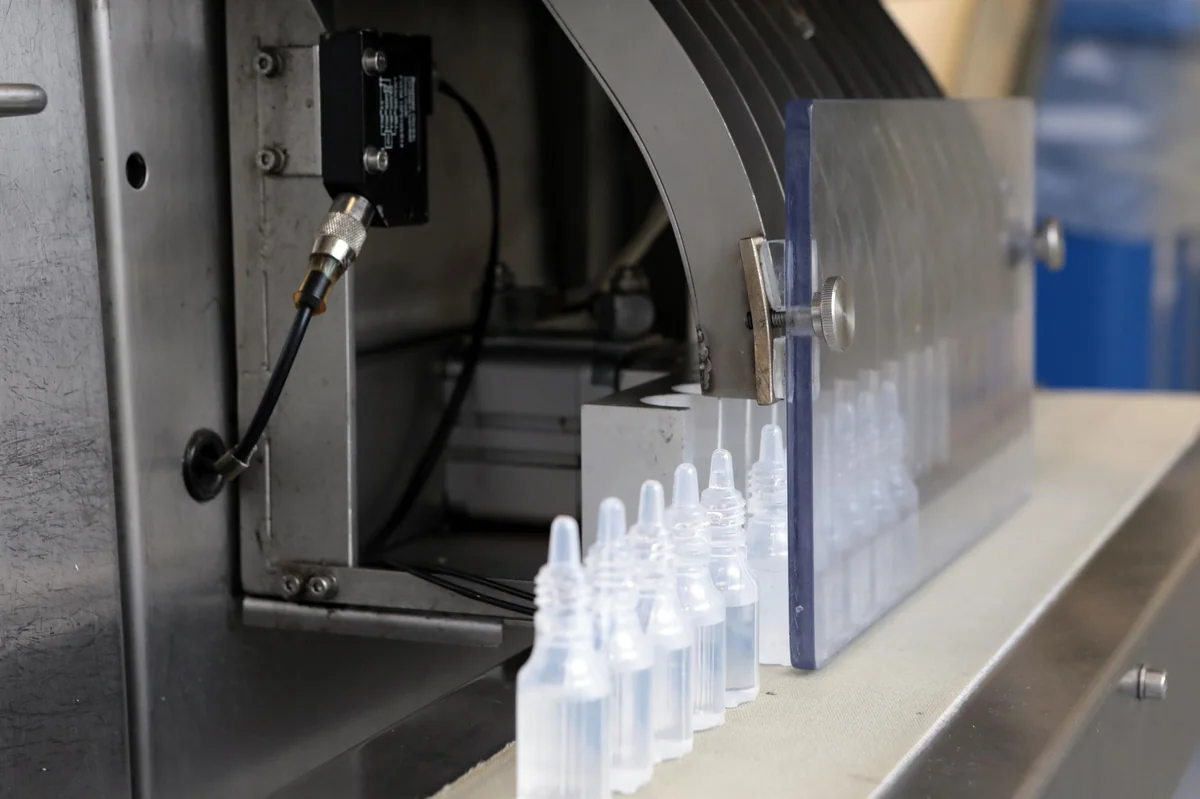
So when you’re actually evaluating an automatic aerosol production line for air freshener, the first thing to nail down isn’t the headline speed — it’s the fill volume range. Air freshener formulations vary more than people expect. A light water-based mist and a thick fragrance-oil blend behave completely differently under pressure, and your filling heads need to handle both without constant recalibration. Most mid-tier lines support a fill range of roughly 50ml to 500ml per can, but verify that against your actual SKU mix — not just your hero product.
The automatic sealing machine is the other component that deserves serious scrutiny. Sealing failures — even at a 0.1% defect rate — compound fast at volume. Look for crimping heads with adjustable pressure control, and ask specifically about changeover time when switching between can diameters. A line that takes 45 minutes to retool between a 52mm and 65mm can is quietly eating your throughput.
And propellant handling specs matter just as much as fill speed. LPG, DME, compressed air — each has different pressure tolerances and safety requirements, and the equipment needs to match your formulation from day one. (This is the spec conversation that gets skipped in a lot of early-stage RFQs, and then causes expensive retrofits later.)
- Fill volume range: confirm it covers your full SKU lineup, not just your primary product
- Crimping consistency: target a defect rate under 0.05% at rated speed
- Propellant compatibility: verified against your specific gas blend, not a generic spec sheet
- Changeover time: under 30 minutes for diameter switches is a realistic benchmark on modern lines
- Control system: PLC-based controls with real-time reject detection, not manual QC checkpoints
Brands operating under labels like Aile — regional retail, moderate SKU count, predictable seasonal demand — often find that a mid-range line with tight sealing specs outperforms a faster line with sloppy QC. Speed without consistency is just a faster way to produce rejects. Think of it like the difference between a Nike Air Max built to spec versus one that’s been rushed through final assembly — the specs looked the same on paper.
Tight specs. Verified in context. That’s the actual job here.
Quality Control Systems in Modern Air Freshener Production Lines: Ensuring Consistency and Safety
QC on a modern automatic aerosol production line for air freshener isn’t a single checkpoint at the end of the line. It’s a layered system — and if any one layer fails quietly, you don’t find out until a retailer starts getting complaints about leaking cans or inconsistent spray patterns. That’s an expensive lesson.
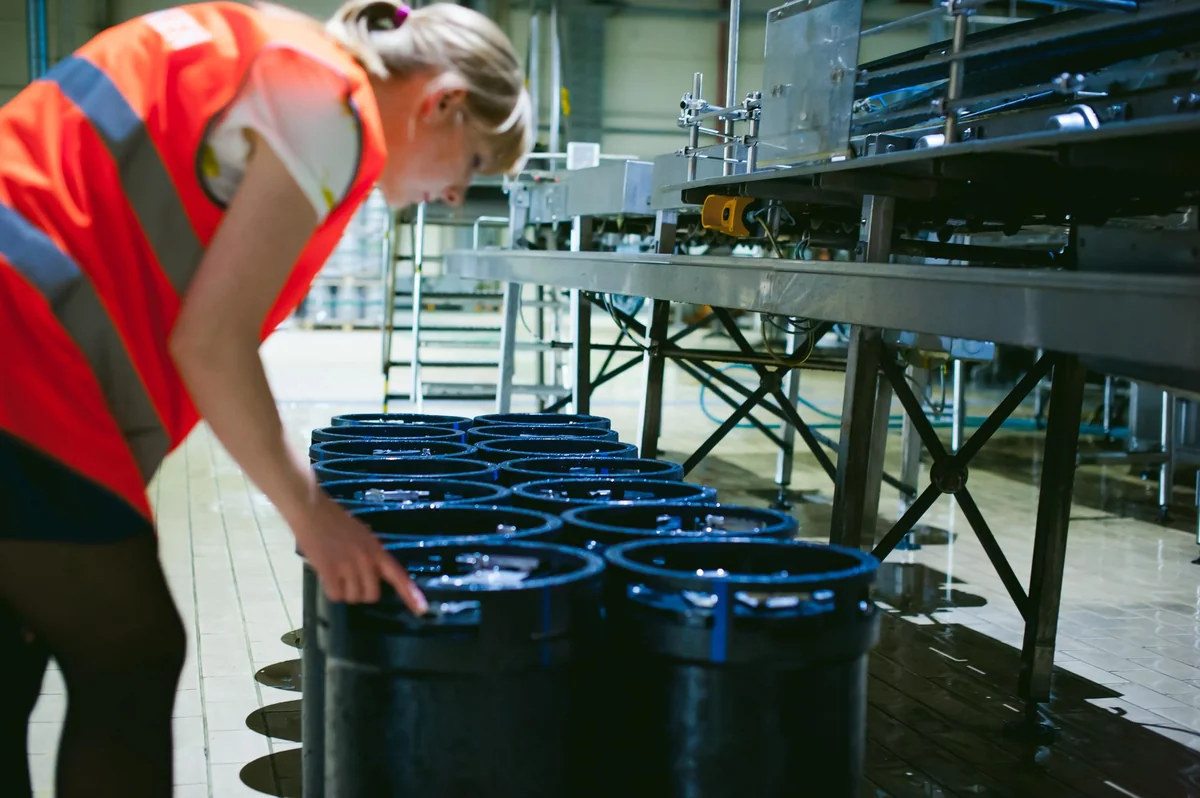
The baseline expectation now is inline weight verification at the filling station, leak detection immediately post-sealing, and actuator function testing before cans exit the line. Not batch sampling. Continuous. A well-configured automatic sealing machine will reject a non-conforming can in under a second — no human intervention, no “we’ll catch it at packing.” The detection is the process.
Here’s what the actual control layers look like on a properly spec’d line:
- Fill weight sensors: ±0.5g tolerance is achievable on modern gravimetric systems — anything looser than that and you’re shipping variable product
- Seal integrity: helium or nitrogen leak detection inline, not offline spot checks
- Valve crimp depth: vision systems or mechanical gauges verify crimp consistency after every head change
- Pressure verification: especially critical when propellant blends shift between SKUs
- Actuator testing: spray function confirmed before labeling, not after
So why does this matter for mid-market brands? Take a label like Aile — moderate volume, a handful of SKUs, seasonal demand spikes. The QC burden there isn’t about chasing maximum throughput. It’s about maintaining consistency across a run that might pause for two weeks and restart. A line that holds calibration across interruptions is worth more than a faster one that drifts.
Honestly, the analogy holds: a Nike Air Max passes QC because every component — sole thickness, stitch density, foam compression — is verified against a spec, not eyeballed. Air freshener cans aren’t glamorous, but the principle is identical. Spec it. Verify it. Reject what doesn’t pass.
Suppliers working in export-oriented environments — coordinating OEM specs across multiple international buyers — need QC documentation that travels with the product. Calibration records. Rejection logs. Batch traceability. That’s not bureaucracy. That’s how you protect the brand on the shelf.
Cost-Benefit Analysis of Automated vs. Semi-Automated Aerosol Packaging Solutions
The numbers here don’t lie — but they do mislead if you’re not reading them carefully. A fully automatic aerosol production line for air freshener carries a steeper entry cost, no question. You’re looking at capital outlay that can run anywhere from $80,000 to well above $200,000 depending on line speed, filling heads, and whether an automatic sealing machine is integrated or added as a separate module. Semi-automated setups look attractive on a spreadsheet. Until you run them for six months.
Here’s what the upfront comparison actually looks like across the two configurations:
| Factor | Fully Automated Line | Semi-Automated Line |
|---|---|---|
| Capital cost | High ($80K–$200K+) | Moderate ($25K–$70K) |
| Labor requirement | 1–2 operators per shift | 4–8 operators per shift |
| Output consistency | High — machine-controlled | Variable — operator-dependent |
| Fill accuracy | ±0.5% or better | ±2–4% typical |
| Changeover time | 15–45 minutes (programmatic) | 60–120 minutes (manual retooling) |
| Payback horizon | 18–36 months at scale | Faster initially, slower long-term |
So the semi-automated path isn’t wrong. It’s just context-dependent. A smaller regional brand running two SKUs at modest volume? Semi-automated might be the right call for years. But the moment you’re fulfilling export orders across multiple buyers — each with their own fill weight specs, valve configurations, and labeling requirements — the manual variability compounds fast. Really fast.
Think about what Aile and similar mid-tier aerosol brands deal with when scaling internationally. Each new market adds a layer of compliance, and every deviation in fill accuracy or seal integrity becomes a rejection risk at customs or on the retail floor. That’s not a QC problem. That’s a line-configuration problem.
And the labor math is brutal once you actually model it. Eight operators across two shifts, five days a week — that’s a recurring cost that a fully automated aerosol production line for air freshener absorbs within two to three years. The automatic sealing machine alone reduces one of the highest-error steps in the process. Consistent crimp depth. Every can. No fatigue factor. (Which, if you’ve ever watched a manual crimping station at hour seven of a shift, you’ll know matters more than people admit.)
Conclusion
At a certain volume, manual just doesn’t hold up — and the math on that is less forgiving than most buyers want to admit until they’re already in trouble.
An automatic aerosol production line for air freshener isn’t a luxury purchase for high-output facilities. It’s the infrastructure decision that determines whether you can actually fulfill consistent, multi-SKU orders across different markets without hemorrhaging labor costs or eating rejection rates. The fill accuracy alone — never mind the crimp consistency, never mind the throughput — justifies the shift.
So if you’re still modeling growth on a manual setup, run the two-year labor cost against a fully automated line before your next procurement cycle. The number might surprise you.
Frequently Asked Questions
Q: What is an automatic aerosol production line for air freshener and how is it different from semi-automatic?
A: An automatic aerosol production line for air freshener handles the full sequence — filling, crimping, gassing, leak testing, and cap placement — without an operator touching the can between stations. Semi-automatic lines still require manual loading or valve placement at one or more points, which is exactly where consistency breaks down at scale. The throughput gap is significant: a properly configured automatic line can run 3,000–6,000 cans per hour versus 800–1,200 on a semi-auto setup.
Q: How much does an automatic aerosol production line for air freshener cost?
A: Entry-level automatic lines from established Chinese OEM suppliers typically start around $80,000–$150,000 USD, depending on speed rating and whether propellant gassing equipment is bundled in. European-branded lines (Coster, Pamasol) can push well past $400,000 once you factor in installation and commissioning. Most buyers sourcing through export-focused suppliers get the most value in that $100K–$200K range — it’s where build quality and price actually meet.
Q: Why does fill accuracy matter so much on an automatic aerosol production line for air freshener?
A: Air freshener formulas are propellant-heavy — typically 40–60% propellant by weight — so even a 2–3% fill variance per can compounds fast across a production run. Underfilled cans fail pressure specs and create liability exposure; overfilled cans are a direct materials cost bleed. Automatic lines with mass-flow filling heads routinely hold tolerances inside ±0.5g, which is simply not achievable by hand.
Q: How long does it take to install and commission an automatic aerosol line?
A: Realistically, budget 4–8 weeks from equipment arrival to stable production — and that’s assuming your facility already has compressed air, appropriate electrical supply, and propellant storage cleared by local safety authorities. Suppliers who offer remote commissioning support (video-guided startup) can shave that window, but the first two weeks are almost always troubleshooting your specific formulation’s viscosity and the valve crimp depth. Don’t let anyone tell you it’s a one-week job.
Q: Can an automatic aerosol production line for air freshener run multiple SKUs without a full changeover?
A: It depends on the line’s design — some automatic aerosol production lines for air freshener are built for single-SKU high-volume runs, while others include quick-change tooling for valve heads and fill nozzles that let you switch between can diameters (52mm vs. 65mm, for example) in under 30 minutes. If you’re running a multi-fragrance or multi-format catalog, that changeover spec is worth negotiating upfront. Buyers sourcing custom OEM lines should ask specifically about format flexibility before signing off on tooling specs.
Q: Is it worth buying an automatic aerosol line if my monthly volume is under 500,000 cans?
A: Honestly, 500,000 cans/month is roughly the floor where automation math starts working cleanly — below that, a well-run semi-automatic setup with tight QC protocols can still be cost-competitive. That said, if you’re growing toward that number or running multi-shift operations to compensate for manual speed limits, the two-year labor cost comparison usually closes the argument. Run the numbers against your actual rejection rate too, not just your labor headcount.
Q: What safety certifications should an automatic aerosol production line for air freshener meet?
A: At minimum, look for CE marking (required for EU markets), and confirm the line’s propellant gassing station complies with ATEX or equivalent explosion-proof standards — this is non-negotiable when you’re handling flammable propellants like LPG or DME. Lines destined for North American facilities should also align with NFPA 30B guidelines. Suppliers who export regularly to Western markets — like those handling international OEM orders — typically have this documentation ready; if a supplier hesitates on the ATEX question, that’s a red flag worth taking seriously.
Q: How do I know if a supplier’s automatic aerosol line is actually built for air freshener formulas specifically?
A: Ask whether the filling heads are designed for low-viscosity, alcohol-based liquids — because air freshener concentrate behaves very differently from, say, a thick paint or personal care foam. A general-purpose aerosol line might struggle with foaming at the fill nozzle or propellant flash-off before crimping. Request a trial run data sheet or a video of the line processing a comparable formula; any supplier with real production experience should have that without hesitation.