
What a Vacuum Emulsifying Mixer Actually Does for Cosmetic Cream Production
Cosmetic cream manufacturing has a physics problem. Oil and water don’t mix — at least not without serious mechanical intervention — and getting them to form a stable, silky emulsion that won’t separate on a shelf three weeks later is genuinely harder than most people outside the industry realize.
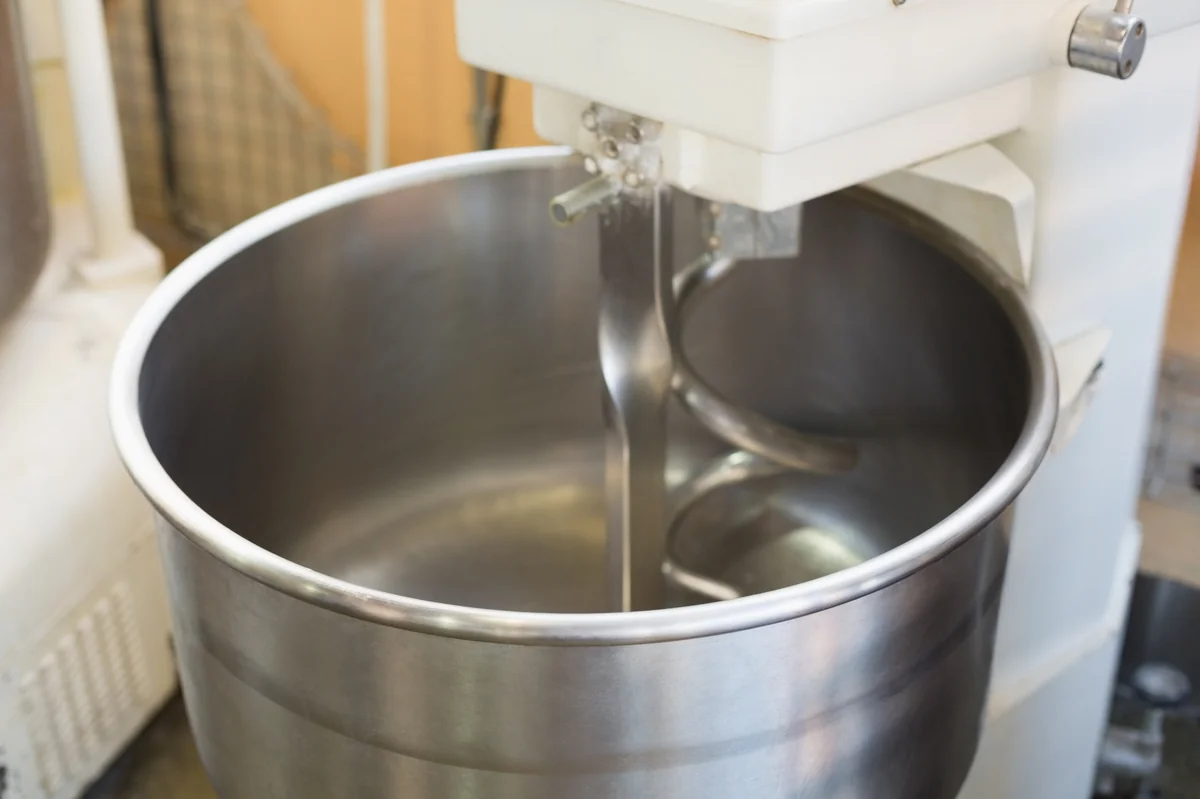
That’s exactly what a vacuum emulsifying mixer for cosmetic cream is built to solve. The machine combines a high-shear homogenizer, a heating and cooling jacket, and a vacuum system into one sealed vessel. The vacuum piece is what separates this from a basic mixing tank: by pulling air out of the chamber before and during mixing, you eliminate the microbubbles that would otherwise get trapped in the emulsion. Those bubbles cause oxidation, uneven texture, and shortened shelf life — none of which a customer is going to forgive.
So the process works roughly like this:
- The water phase and oil phase are heated separately (often to 70–80°C) in flanking pre-mix tanks.
- Both phases are drawn into the main vacuum vessel under negative pressure.
- The high-shear homogenizer — typically running between 3,000 and 4,000 RPM — tears the oil droplets down to micron-level particle sizes and disperses them evenly through the water phase.
- The anchor or frame agitator keeps the bulk mass moving while the homogenizer works on the fine structure.
- The jacket cools the batch to filling temperature without breaking the emulsion.
The result is a cream with uniform droplet distribution, smooth skin feel, and a stability profile that actually holds up in real-world conditions. Brands like Aile that supply equipment for this process emphasize the vacuum integrity of the vessel as a core spec — and honestly, that’s the right thing to focus on, because a vacuum emulsifying mixer for cosmetic cream is only as good as its ability to maintain consistent negative pressure throughout the cycle.
Bubble-free. Oxidation-controlled. Repeatable batch to batch. That’s the whole point.
How the Vacuum Emulsifying Mixer Process Affects Cream Texture and Stability
Texture isn’t just aesthetics. It’s the first thing a customer feels, and it’s what determines whether they finish the jar or quietly return it. And the process inside a vacuum emulsifying mixer for cosmetic cream is almost entirely responsible for what that texture ends up being — which is why the process details actually matter, not just the final formula on paper.
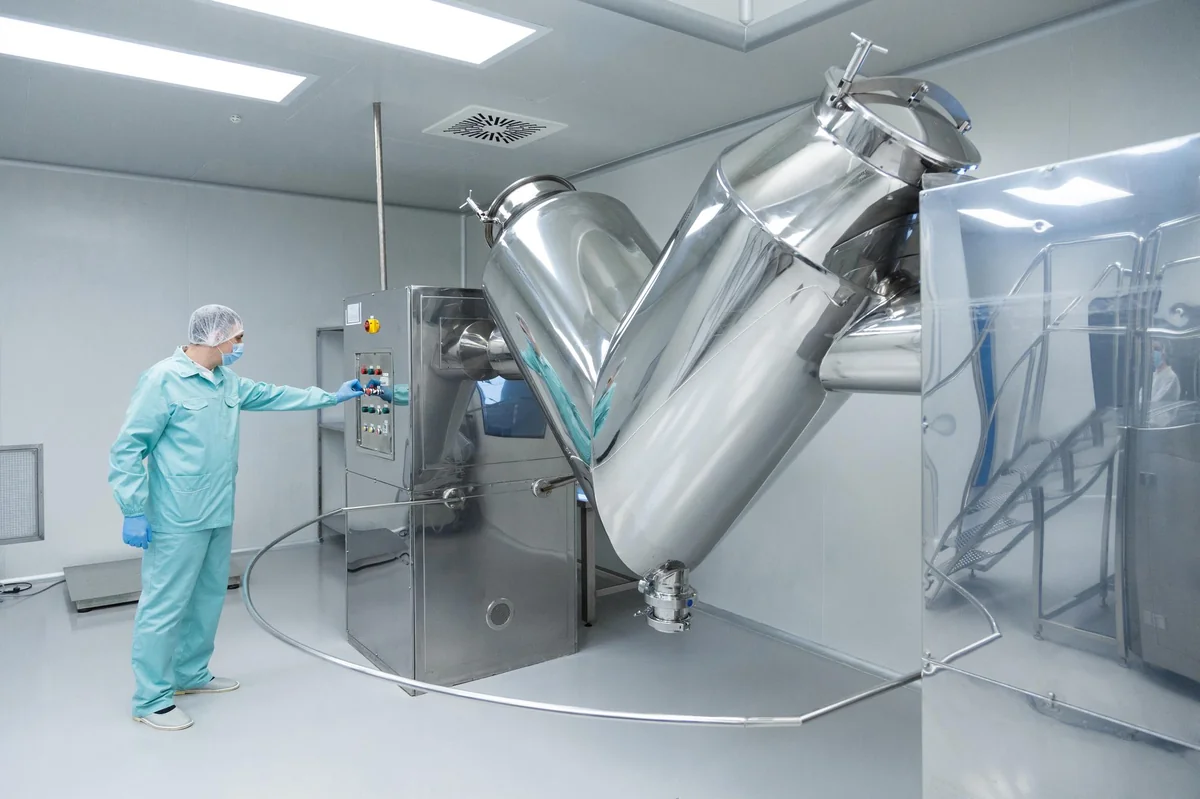
So here’s what’s actually happening at a physical level. When the homogenizer runs under negative pressure — typically somewhere around -0.06 to -0.09 MPa — it’s not just breaking oil droplets into smaller ones. It’s doing that without pulling air into the matrix. Air bubbles are essentially defect sites in an emulsion. They destabilize the interfacial film around oil droplets, create oxidation pockets (especially nasty for vitamin C or retinol formulas), and show up as micro-voids that ruin the sensory feel on skin. Vacuum removes that variable entirely.
Droplet size is the other thing. A poorly controlled homogenization step produces a wide droplet size distribution — some droplets at 5 microns, others at 20 — and that variance is what causes creams to separate or go grainy within weeks. A well-run vacuum emulsifying mixer for cosmetic cream targets a tight, narrow distribution, usually under 5 microns for premium skin creams, and holds it batch to batch. That consistency is what makes the difference between a formula that passes stability testing once and one that actually performs on shelf over 24 months.
Cooling matters more than most people expect. If you drop temperature too fast, you stress the emulsion before the droplets have fully stabilized. Too slow, and you’re sitting at elevated temperatures longer than the actives want to be. The jacketed vessel — the part Aile and similar equipment suppliers tend to engineer carefully — controls that cooling curve precisely, which protects both structure and ingredient integrity simultaneously.
Stability. Smoothness. Repeatability. Those aren’t accidents of formulation. They’re outputs of a controlled process.
The Role of Vacuum Pressure in Preventing Air Bubbles in Emulsified Cream
Air is the enemy. Not dramatically — it won’t blow up your batch — but trapped air bubbles will wreck your texture, accelerate oxidation, and give you a final cream that looks amateur under any kind of quality inspection. That’s the problem vacuum pressure solves, and it’s one of the reasons a vacuum emulsifying mixer for cosmetic cream exists as a distinct machine category rather than just a fancy blender with a heating jacket.
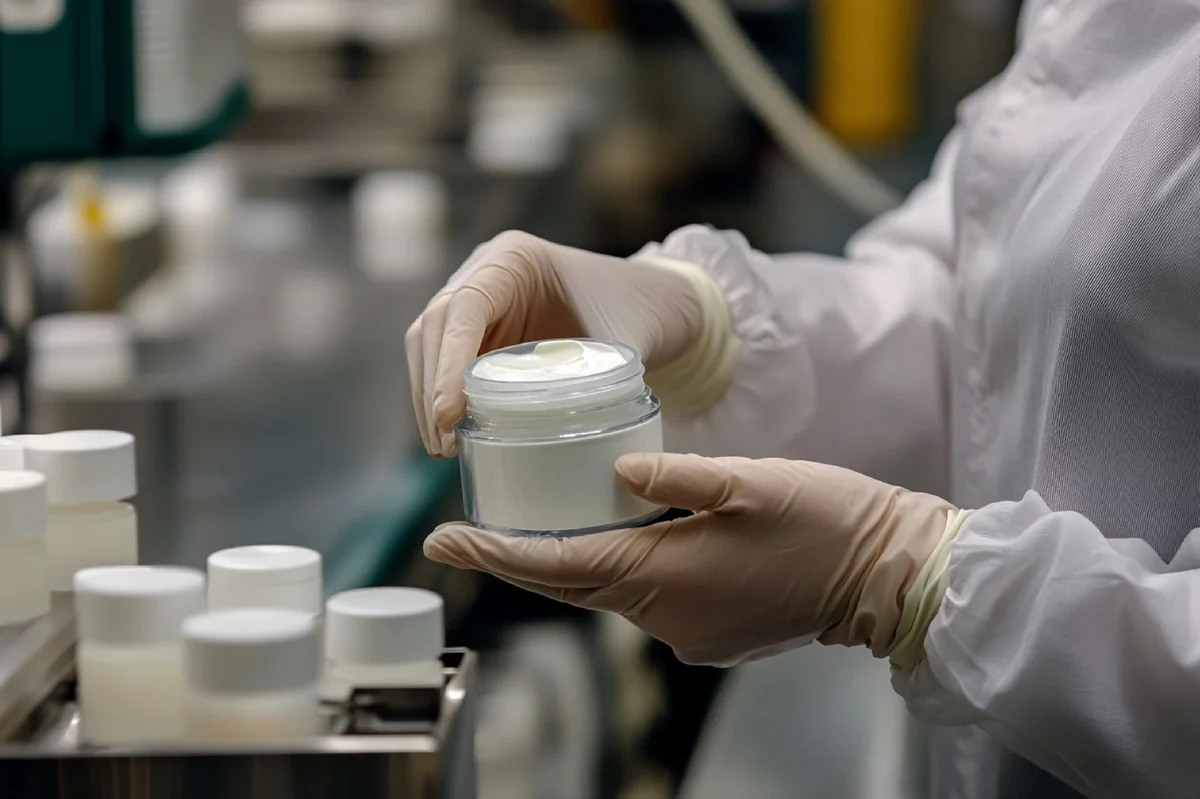
So here’s what actually happens without vacuum: as the homogenizer spins at high shear, it doesn’t just break droplets down — it also whips air into the mix. Every time you open a vessel or introduce ingredients at atmospheric pressure, you’re inviting microscopic bubbles in. Those bubbles don’t just disappear on their own. They get trapped in the emulsion matrix as it thickens, and once the cream cools and sets, they’re locked in permanently. You see it as pinholes, foam-like texture, or a slightly grainy surface that customers notice immediately (even if they can’t name what’s wrong).
Vacuum changes the physics of the whole operation. By pulling the chamber down — typically to somewhere around -0.08 to -0.1 MPa — you remove the atmospheric conditions that allow air entrainment in the first place. Ingredients degas before mixing starts. The homogenization phase runs in a low-pressure environment where bubbles simply can’t form and sustain themselves. And when you’re done, the cream comes out dense, uniform, and visually clean in a way that atmospheric mixing almost never delivers at scale.
There’s a secondary benefit that doesn’t get talked about enough: vacuum also helps with volatile actives. Fragrance components, certain botanical extracts, heat-sensitive vitamins — they’re less likely to off-gas or degrade when the mixing environment is sealed and depressurized. Equipment built by manufacturers like Aile is specifically designed to maintain that vacuum integrity across the full batch cycle, not just during one phase.
- Degassing before homogenization removes dissolved air from raw materials
- Sealed vacuum mixing prevents new air entrainment during high-shear stages
- Post-mix vacuum hold allows any residual micro-bubbles to collapse before discharge
Cleaner texture. Better shelf stability. No compromises.
Why Homogenization Speed Matters for Cosmetic Cream Consistency
Speed settings on a homogenizer are not decorative. They are the single biggest variable between a cream that sells and one that gets returned with a complaint about “weird texture.”
Here’s the actual mechanics of it: homogenization works by forcing the oil-water interface through a narrow rotor-stator gap at high velocity — typically anywhere from 1,500 to 6,000 RPM depending on the formulation and batch size. That shear force breaks down fat globules and active ingredient particles into droplets small enough to stay suspended. Too slow, and you get a coarse, unstable emulsion that separates on the shelf. Too fast, and you can overheat sensitive actives or create excessive foam — which, in a vacuum emulsifying mixer for cosmetic cream, is exactly the kind of problem the vacuum system is designed to prevent, but it’s still better not to generate it in the first place.
Viscosity is the complicating factor nobody warns you about upfront.
A light lotion and a dense cold cream behave completely differently under shear. The lotion might hit optimal droplet size at 2,500 RPM in four minutes. That same speed applied to a heavy barrier cream could under-process the batch entirely — leaving visible fat streaks and a grainy feel that no amount of additional mixing will fix after the fact. Equipment like Aile’s vacuum emulsifying systems addresses this with variable-speed homogenizer controls that let operators dial in the exact RPM curve for each formula, rather than running everything at a fixed setting and hoping for the best.
And the timing matters just as much as the speed itself. Most formulations benefit from a staged approach: lower shear during initial phase combination, ramping up once the emulsion starts to form, then backing down toward the end of the cycle to avoid overworking the structure. That kind of control — granular, responsive, repeatable — is what separates professional production from guesswork.
- Low RPM (1,500–2,500): suited for delicate actives, heat-sensitive botanicals, light emulsions
- Mid RPM (2,500–4,000): standard range for most O/W and W/O cream formulations
- High RPM (4,000–6,000): used for dense creams, waxes, and structured emulsions requiring aggressive particle reduction
Get this wrong and the vacuum emulsifying mixer for cosmetic cream does everything right except produce a consistent product. Speed is where the formula meets the machine.
Conclusion
The machine is only as good as the person running it — and that means understanding that vacuum, temperature, and rotor speed aren’t just settings you dial in once and forget. They interact. Change one, and the other two need to follow.
A vacuum emulsifying mixer for cosmetic cream gives you real control over emulsion quality, but control only matters if you’re actually using it. Staged speed cycles, proper deaeration timing, and phase-specific temperature management — get those three things right and your batches stop being a gamble.
If you’re scaling up or speccing new equipment, don’t just chase horsepower numbers. Look at how precisely the system lets you respond mid-cycle. That’s where consistency actually gets built.
Frequently Asked Questions
Q: What is a vacuum emulsifying mixer for cosmetic cream, and how is it different from a regular mixer?
A: A vacuum emulsifying mixer for cosmetic cream pulls air out of the mixing chamber while it homogenizes — that’s the part most people miss. Standard mixers just blend; they don’t remove the microbubbles that degrade texture, shorten shelf life, and make creams look aerated instead of smooth. The vacuum function is what separates cosmetic-grade emulsification from industrial stirring.
Q: How long does a typical batch cycle take?
A: Realistically, 45 to 90 minutes for most cream formulations — but that number moves depending on viscosity, batch size, and whether you’re doing staged speed cycles or running flat. Deaeration alone can eat 15–20 minutes if you’re doing it properly at the end of the cycle. Don’t plan your production schedule around the minimum time the manufacturer quotes.
Q: Why does my cream still have air bubbles after using a vacuum emulsifying mixer?
A: Nine times out of ten, it’s a timing problem — the vacuum is being applied too early, before the emulsion has enough structure to hold the deaeration. You want the rotor speed down and the emulsion near its cooling phase before you pull a hard vacuum. Also check your lid seals; even a minor gasket failure will bleed pressure and undermine the whole process.
Q: How much does a vacuum emulsifying mixer for cosmetic cream cost?
A: Lab-scale units (2–5L) from Chinese OEM suppliers typically run $1,500–$6,000 depending on control system quality and whether the frame is jacketed. Mid-range production models in the 50–200L range jump to $15,000–$50,000+. Suppliers like Shenxianhu that handle OEM and custom-spec orders can quote against your exact capacity and feature requirements — which honestly beats trying to reverse-engineer a spec sheet from a catalog listing.
Q: Can I use a vacuum emulsifying mixer for cosmetic cream to make both oil-in-water and water-in-oil emulsions?
A: The machine handles both — what changes is which phase you heat, which you add first, and how aggressively you homogenize. Water-in-oil emulsions (think heavy night creams) generally need lower rotor speeds and tighter temperature control during the combine phase. The equipment doesn’t care about the emulsion type; your process parameters do.
Q: What rotor speed should I be running for cream emulsification?
A: Most vacuum emulsifying mixers for cosmetic cream run homogenizer speeds between 1,500 and 3,500 RPM — but starting at full speed is almost always the wrong move. A staged approach (low speed during phase combination, ramp up through peak homogenization, then back down before vacuum deaeration) gives you far more consistent particle size distribution than just hammering it at 3,000 RPM the whole time.
Q: Is a vacuum emulsifying mixer worth it for small-batch indie cosmetic brands?
A: If you’re producing more than 20–30kg per week and selling into retail or professional channels, the consistency argument alone justifies the investment. Hand-mixed or open-vessel production just can’t replicate the texture stability and microbial risk reduction that vacuum processing gives you — and that matters the moment a customer starts comparing your lotion to a competitor’s on a store shelf.
Q: How do I clean a vacuum emulsifying mixer for cosmetic cream between different formulations?
A: CIP (clean-in-place) systems on higher-end units make this manageable, but for most mid-range machines you’re looking at a hot water flush, a detergent cycle, and a rinse — with manual attention to the homogenizer rotor head, which traps residue in the gap between stator and rotor. Cross-contamination between fragrance variants or pigmented formulas is a real issue if you skip the rotor disassembly step. Related reference: 科普外链.