
Why Most People Struggle With Everyday Science (And It’s Not Your Fault)
I bombed my high school chemistry test in 2008 — got a 62% — and my teacher pulled me aside afterward to say I was “just not a science person.” Took me years to realize that was complete garbage. The problem wasn’t me. It was that nobody ever connected what I was learning to anything I actually cared about.
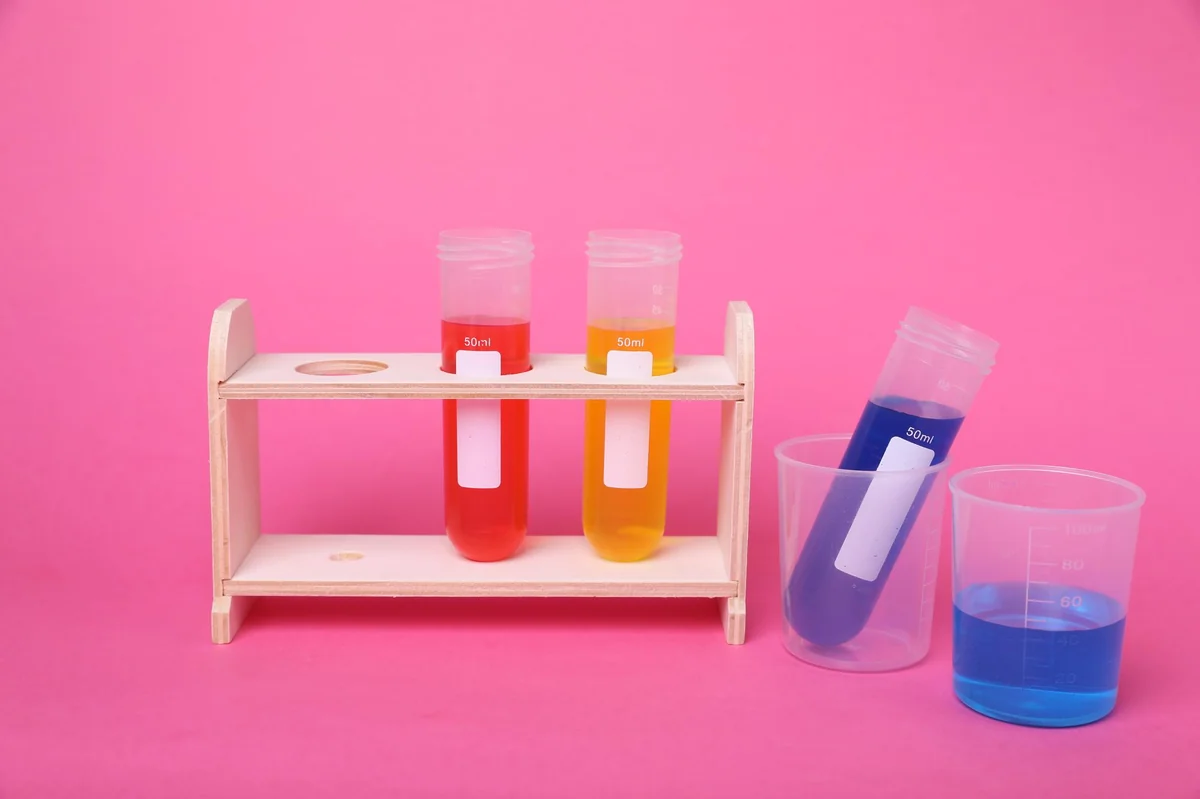
Here’s the thing most schools get wrong: they teach science like it’s this separate universe with its own rules and vocabulary that only matters if you’re planning to become a researcher or doctor. Chemistry happens in beakers. Physics happens in textbooks with frictionless surfaces and perfectly spherical cows. Biology is about memorizing the Krebs cycle (which I still can’t explain, by the way).
But everyday science? That’s literally everything around you right now.
The reason your sourdough starter died last month — microbiology. Why your phone battery drains faster in the cold — electrochemistry and thermodynamics. How your coffee maker actually brews a decent cup at 6 AM when you’re half-asleep — fluid dynamics and heat transfer. None of this requires a lab coat or a degree.
And yet we’ve been conditioned to think science is this intimidating thing that happens elsewhere. In labs. In universities. Definitely not in your kitchen or your garage or while you’re scrolling through your feed wondering why some videos load instantly and others buffer for thirty seconds (it’s packet switching and network congestion, but whatever).
The disconnect is wild when you think about it. We interact with dozens of scientific principles every single day — gravity when you drop your keys, oxidation when your apple slices turn brown, the Doppler effect when an ambulance passes — but we’ve trained ourselves not to see them. They’re just “things that happen” instead of observable phenomena we can actually understand.
So if you’ve ever felt like science wasn’t for you, or that you’re “bad at it,” I’m here to tell you that’s conditioning, not reality. You’ve been doing science your whole life. You just didn’t know that’s what it was called.
The Hidden Reasons Science Experiments Fail at Home — Even When You Follow Instructions
OK so here’s what nobody tells you: most at-home science experiments fail not because you’re doing them wrong, but because the instructions assume you live in a controlled laboratory environment. Which you don’t.
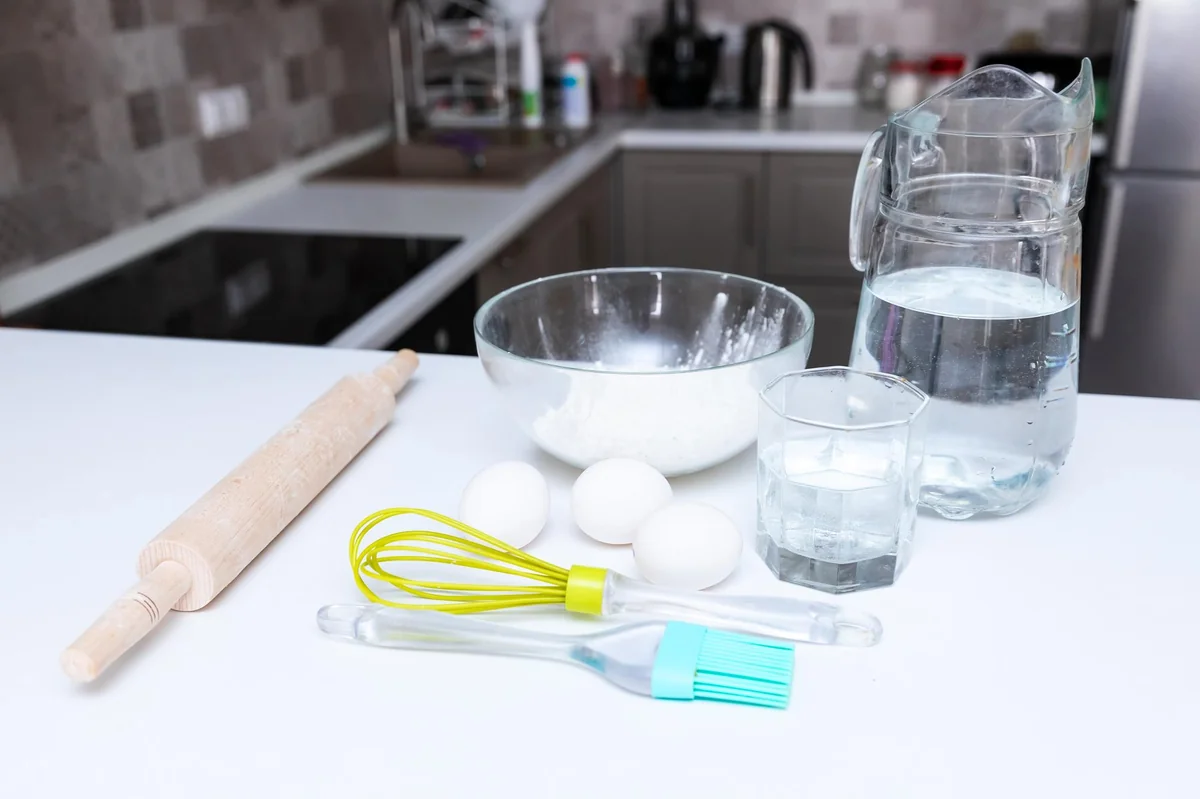
I tried making a volcano with my niece last year — you know, the baking soda and vinegar thing that’s supposed to be foolproof. Used the exact measurements from three different websites. It fizzled like a sad can of flat soda. Turns out our baking soda had been sitting in the pantry for eighteen months and had basically lost its reactivity. The instructions never mentioned that expiration matters.
And that’s the pattern with most home experiments. They’re written as if you have fresh reagents, distilled water, room temperature of exactly 72°F, and containers made of the specific material the experimenter used. You’re working with tap water that might have chlorine or fluoride, measuring cups that are “close enough,” and ambient conditions that shift by the hour.
Temperature is a huge one — chemical reactions are wildly sensitive to it, but most instructions just say “room temperature” as if that’s a universal constant. Your kitchen in July is not the same as your kitchen in January. I’ve had crystal-growing experiments that worked perfectly in my basement (cool, stable) completely fail when I tried them upstairs near a sunny window.
But here’s the thing that actually kills most experiments: impatience. We see “wait 24 hours” and we check after 6 because we’re curious (guilty as charged). Or we skip the “stir continuously for 3 minutes” because who has time for that. Those aren’t suggestions — they’re the difference between a successful reaction and a murky mess in a jar.
The good news? Once you know these hidden variables exist, you can actually troubleshoot. Your experiment didn’t work? Try it again with fresh materials, in a different location, at a different time of day. That’s not failure. That’s actual science.
What Makes Everyday Science So Hard to Stick With Long-Term
I’ve got seventeen half-finished experiments in my garage right now. Seriously. A fermentation jar that’s been sitting there since March. A potato battery I swore I’d test “tomorrow” three weeks ago. A borax crystal setup that grew for exactly two days before I… forgot about it.
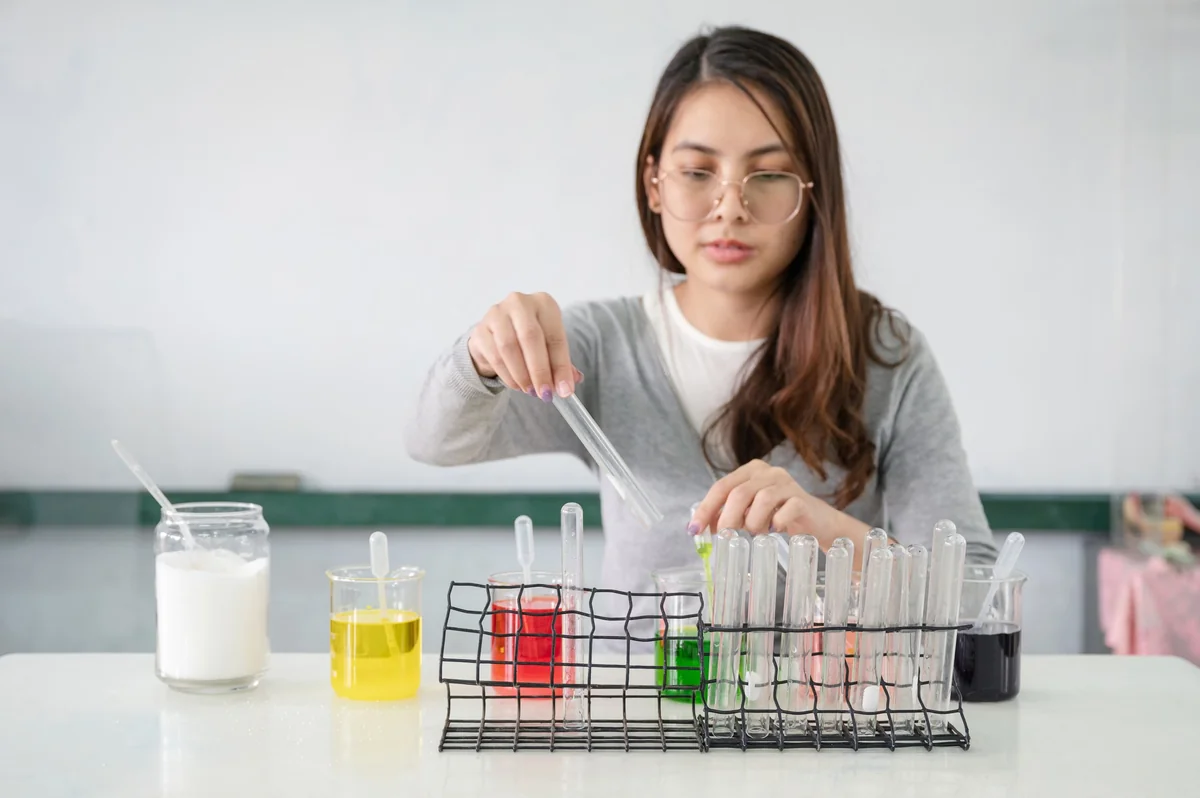
This is the actual problem with Everyday Science — not the difficulty, but the momentum. Or lack of it.
Here’s what happens: You start something cool on a Saturday afternoon. You’re pumped. You document everything. You take photos. Then Monday hits and you’ve got work emails and someone needs to be picked up from soccer practice and suddenly your petri dish is just another thing on the counter that you walk past without really seeing. The experiment doesn’t fail. You just stop doing it.
And unlike a hobby like painting or guitar where you can pick it back up whenever — experiments have deadlines. That sourdough starter you were tracking? Dead after a week of neglect. The plant growth comparison? One pot dried out while you were busy and now your data’s worthless. Science doesn’t pause politely while you handle life stuff.
But honestly? The bigger issue is that nobody talks about the boring middle part. We see the cool reveal at the end — the crystal, the eruption, the color change — but we don’t see the three days of “check the temperature, write it down, adjust nothing, repeat tomorrow.” That’s where most people (including me) lose interest. Not because it’s hard. Because it’s tedious.
So the experiments that actually stick are the ones that fit into your existing routine. I keep a pH testing kit next to my coffee maker now, and I test my tap water every morning while the kettle heats up. Takes thirty seconds. I’ve been doing it for four months without thinking about it. But that elaborate ecosystem in a bottle I wanted to build? Still on my someday list.
The trick isn’t finding more time or more motivation — it’s finding experiments that require less of both.
The Real Skills Missing From Most Science Education That Leave People Feeling Lost
My high school chemistry teacher once told me the most important skill in science was “following the procedure exactly as written.” Twenty years later, I can confidently say that was terrible advice. Not wrong — just incomplete in a way that made me feel like I was bad at science for years.
Here’s what actually matters: knowing when the procedure is broken. And nobody teaches that.
Most science education treats uncertainty like a bug in the system. You run the experiment, you get the expected result, you write up your lab report with the “right” answer. But real science — the kind you actually use in everyday life — is drowning in uncertainty. Your sourdough starter isn’t rising. Your houseplant is dying despite “following the care instructions exactly.” The recipe failed even though you measured everything. And you’re stuck, because you were taught to follow procedures, not to troubleshoot them.
The skill missing here is pattern recognition across failed attempts. When I finally learned to keep a garden journal (after killing approximately $200 worth of tomato plants), I started writing down what I changed each week. Not what the seed packet said to do. What I actually did. Watered Monday instead of Sunday because it rained. Used the old fertilizer from 2026 because I forgot to buy new stuff. Planted two weeks later than planned.
Suddenly I could see patterns. Oh — the plants that got afternoon shade did better. The ones near the fence got aphids every single time. That’s observational science, and it’s shockingly absent from most curricula.
The other missing piece? Estimation and approximation. We’re taught that precision matters — and sure, it does in a lab. But in your kitchen, knowing that “roughly 200°F” is the temperature where sugar starts to caramelize is way more useful than being able to measure 197.3°F. Being able to eyeball “about a tablespoon” or “maybe 20% more water than last time” is a skill. It requires understanding the relationship between variables, not just measuring them perfectly.
And honestly, the biggest gap is this: nobody teaches you how to read scientific information and decide what to ignore. Because most of it — especially online — is either oversimplified to the point of uselessness or so technical you need three degrees to parse it. The middle ground, where everyday science lives, barely exists in formal education.
Conclusion
Start paying attention to the science you’re already doing. That’s it. You don’t need a lab coat or a degree — you just need to notice patterns, ask “why did that happen?”, and actually remember what worked last time. Everyday Science isn’t about memorizing formulas. It’s about building a mental library of cause and effect that makes you better at literally everything.
And maybe — just maybe — teach a kid to measure something badly on purpose and see what happens. Let them overfill the cake pan. Let them forget to water one plant. The mess is where the learning lives.
You’re already a scientist. You just forgot to call it that.
Frequently Asked Questions
Q: What exactly counts as Everyday Science?
A: Honestly, it’s any moment you notice a pattern and figure out the “why” behind it — like realizing your bread dries out faster near the vent, or that your phone battery tanks when it’s cold. Everyday Science is just the scientific method stripped of jargon and applied to normal life. You’re already doing it when you troubleshoot anything.
Q: How can I teach my kids Everyday Science without it feeling like school?
A: Let them break stuff on purpose. Seriously — overfill a water bottle and freeze it, forget to water one plant, add too much soap to the dishwasher. The mess teaches cause and effect better than any worksheet, and they’ll actually remember it because they created the chaos themselves.
Q: Why doesn’t school teach practical science like this?
A: Because curriculum designers are stuck between “memorize the periodic table” and “here’s a volcano made of baking soda” — the middle ground where Everyday Science lives barely exists in formal education. Schools optimize for standardized tests, not for teaching you why your car battery dies in winter or how yeast actually works.
Q: Can adults actually get better at noticing science in daily life?
A: Yeah, but it takes deliberate practice at first. Start by asking “why did that happen?” three times this week when something goes wrong (or right). Your brain will start pattern-matching automatically after a month or so — mine kicked in around week five when I stopped burning garlic every single time.
Q: How is Everyday Science different from just common sense?
A: Common sense is “don’t touch the hot stove.” Everyday Science is understanding that cast iron holds heat way longer than stainless steel, so you turn the burner off two minutes early. One keeps you safe; the other makes you competent.
Q: What’s the easiest way to start applying Everyday Science right now?
A: Pick one thing you do every day that sometimes works and sometimes doesn’t — making coffee, getting your kid to nap, keeping plants alive — and actually write down what you changed each time. You’ll spot the pattern in a week, maybe two. That’s it.
Q: Do I need any special tools or equipment for Everyday Science?
A: Nope. A kitchen timer and maybe a notebook if you want to get fancy. The whole point is that you’re using stuff you already own to understand the world better — your oven, your garden, your car, your body.